
Last tested: July 2026 | Reviewed by the Family Orbit product team
Quick answer: Sent and received text messages normally appear together inside the same conversation thread—there is usually no separate “Sent” folder. On iPhone, open the Messages app and select or search for a conversation. On Android, open the phone’s default messaging app, such as Google Messages or Samsung Messages.
You can also view Android conversations on a computer with Google Messages for web, or keep iPhone messages available across supported Apple devices signed in to the same Apple Account. Viewing a child’s messages remotely is a different use case and requires an authorized parental-monitoring setup.
This guide covers the practical methods for viewing text messages sent and received on iPhone, Android and a computer. It also explains how to find old messages, recover recently deleted conversations, understand delivery indicators and use parental monitoring responsibly.
| What you want to do | Best method | Main limitation |
|---|---|---|
| View messages on your iPhone | Apple Messages app | Only conversations stored on or synced to your devices |
| View messages on Android | Your default messaging app | Menus vary by phone and messaging app |
| Find an old message | Search by contact, number or keyword | Deleted or expired messages may not appear |
| View Android messages on a computer | Google Messages for web | Requires Google Messages and device pairing |
| View iPhone messages on a Mac or iPad | Messages in iCloud and Text Message Forwarding | Devices must use the same Apple Account |
| Recover recently deleted iPhone messages | Recently Deleted in Messages | Normally limited to messages deleted within 30–40 days |
| Restore backed-up Android messages | Android/Google backup during device setup | Restore options depend on the device and Android version |
| View a child’s messages remotely | Authorized parental monitoring | Requires setup, permission and platform support |
Where Are Sent and Received Text Messages Stored?
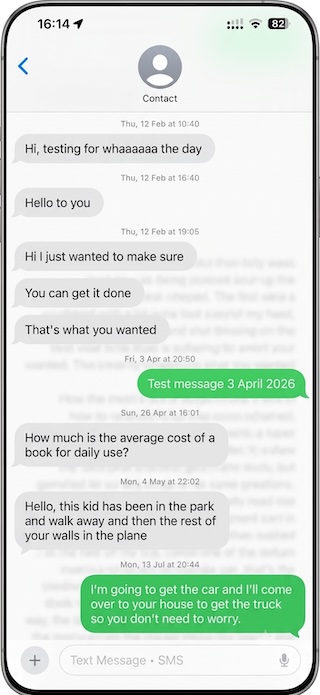
Most modern phones organize text messages by conversation, not by separate Inbox and Sent folders. Open a conversation and you will see messages from both sides in chronological order.
- On iPhone: outgoing iMessages usually appear in blue, outgoing SMS, MMS or RCS messages appear in green, and incoming messages appear in gray.
- On Android: bubble colors and icons vary according to the messaging app, phone brand, theme and whether the conversation uses SMS, MMS or RCS.
- On either platform: tap or press a message to view additional information such as its timestamp, delivery status or available actions.
If the message you need is not visible, use the app’s search function before assuming it has been deleted. Search for the person’s name, phone number, a phrase from the conversation or a distinctive keyword.
How to View Text Messages Sent and Received on iPhone
The Messages app shows your SMS, MMS, RCS and iMessage conversations in one place. The exact labels and filters can vary slightly by iOS version and carrier.
View a conversation in the Messages app
- Open the Messages app.
- Select a conversation to see the messages sent and received between you and that contact or group.
- Scroll upward to view older messages.
- Touch and hold a message when you need options such as Copy, Reply, Forward or More.
- Tap a contact’s name at the top of the conversation to view shared media and conversation details.
Search for an old iPhone message
- Open Messages and go to the conversation list.
- Swipe down if the search field is not visible.
- Enter a contact name, phone number, or phrase from the message.
- Select the relevant result to open that part of the conversation.
Also check message filters such as Unknown Senders if a conversation is missing from the main list. Filtering behavior depends on the settings enabled on the device.
View iPhone messages on a Mac or iPad
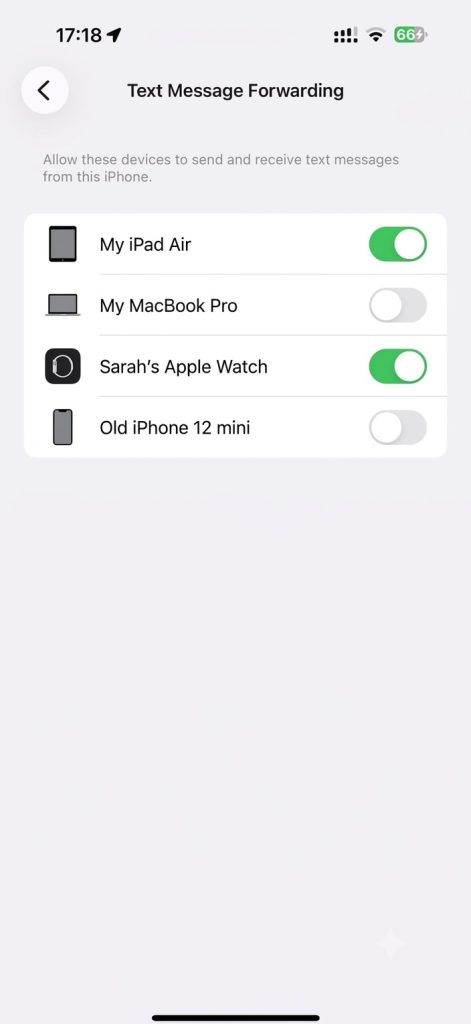
Apple can keep iMessage conversations updated across an iPhone, iPad and Mac through Messages in iCloud. The devices must be signed in to the same Apple Account. To make ordinary SMS and MMS messages available on other supported Apple devices, you may also need to enable Text Message Forwarding on the iPhone.
- On the iPhone or iPad, open Settings and tap your name.
- Open iCloud, choose See All or Show All, and select Messages in iCloud.
- Turn on syncing for that device.
- Confirm that the Mac or iPad uses the same Apple Account.
- For SMS and MMS on another supported Apple device, open the iPhone’s Messages settings and enable Text Message Forwarding for that device.
Important: Messages in iCloud is device syncing—not a browser-based message viewer. Signing in to iCloud.com does not provide a general Messages inbox. Changes and deletions can also sync across devices.
For current menu paths and requirements, see Apple’s official guide to setting up iCloud for Messages.
How to Recover Deleted Text Messages on iPhone
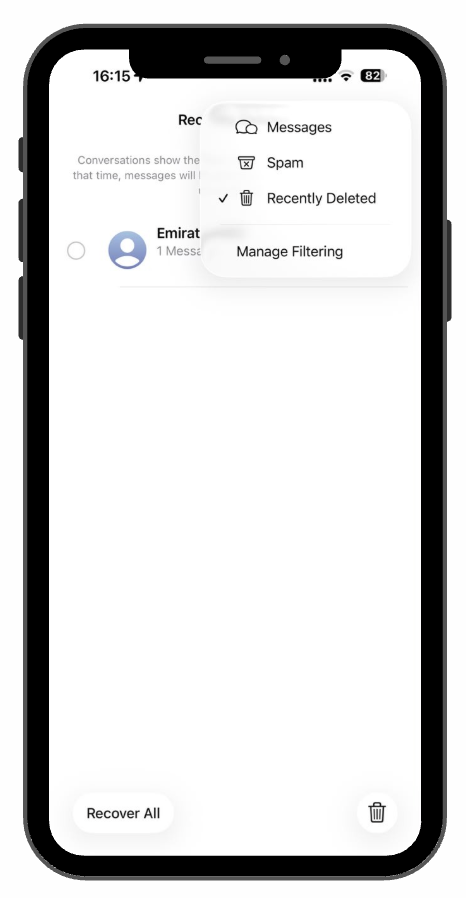
Before restoring an entire iPhone from a backup, check the Messages app’s Recently Deleted folder. On supported iOS versions, Apple allows conversations deleted within approximately 30 to 40 days to be recovered.
- Open Messages.
- From the conversation list, tap Edit or Filters, depending on the iOS version and settings.
- Select Show Recently Deleted.
- Choose the conversation or messages you want to restore.
- Tap Recover and confirm.
Apple notes that this feature requires iOS 16 or later and normally covers messages deleted within the previous 30 to 40 days. See Apple’s official instructions for recovering deleted text messages.
How to View Text Messages Sent and Received on Android
Android phones may use Google Messages, Samsung Messages or another manufacturer’s messaging app. The basic process is the same: open the default messaging app and choose a conversation.
- Open the phone’s default Messages app.
- Select the contact or group whose messages you want to view.
- Scroll upward to see older messages.
- Touch and hold a message to copy, forward, delete or view additional details.
- Use the search icon to find a contact, phone number or keyword.
Check archived, blocked and spam conversations
If a conversation is missing, check the app’s Archived and Spam & blocked areas. A conversation may have been archived accidentally, filtered as spam or moved when the default messaging app changed.
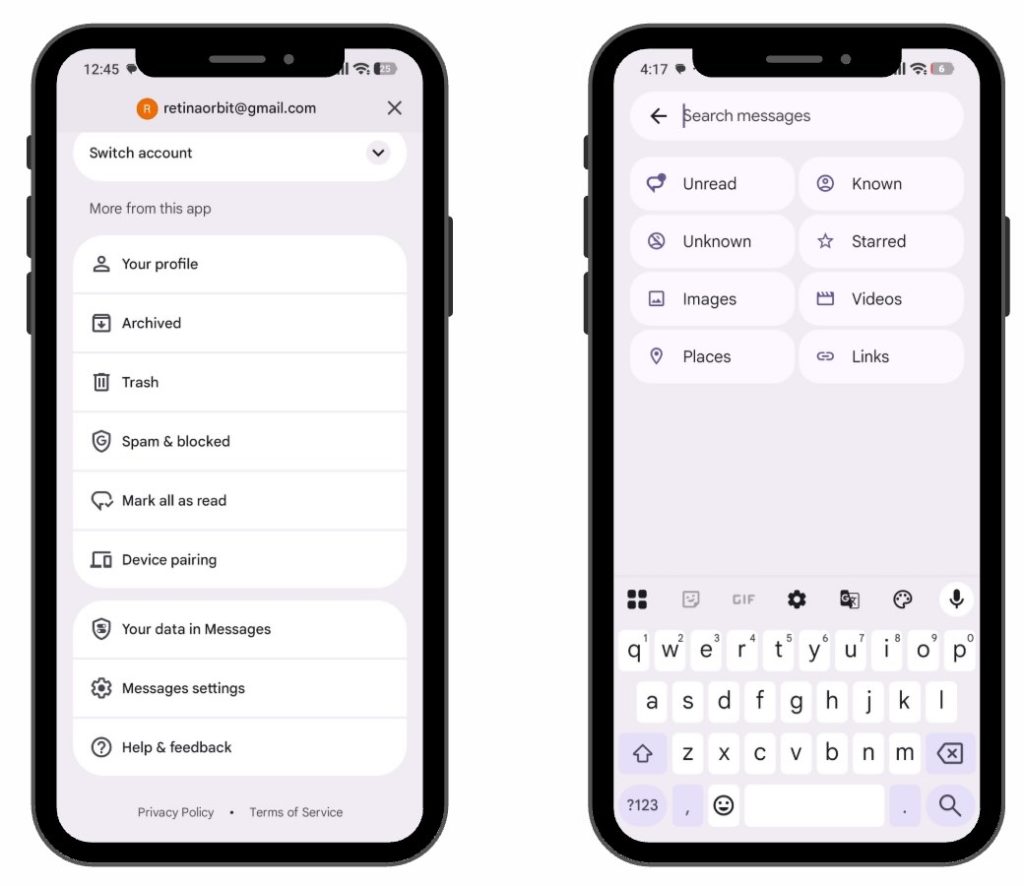
Google Messages versus Samsung Messages
Google Messages supports SMS, MMS and RCS and is the default messaging app on many Android phones. Some Samsung devices still provide Samsung Messages or may have been switched between the two. A change of default app does not necessarily delete the message database, but older conversations may take time to appear or may depend on how the previous app stored them.
For more Android-focused parental options, see our guide to text monitoring apps for Android.
How to View Android Text Messages Online on a Computer
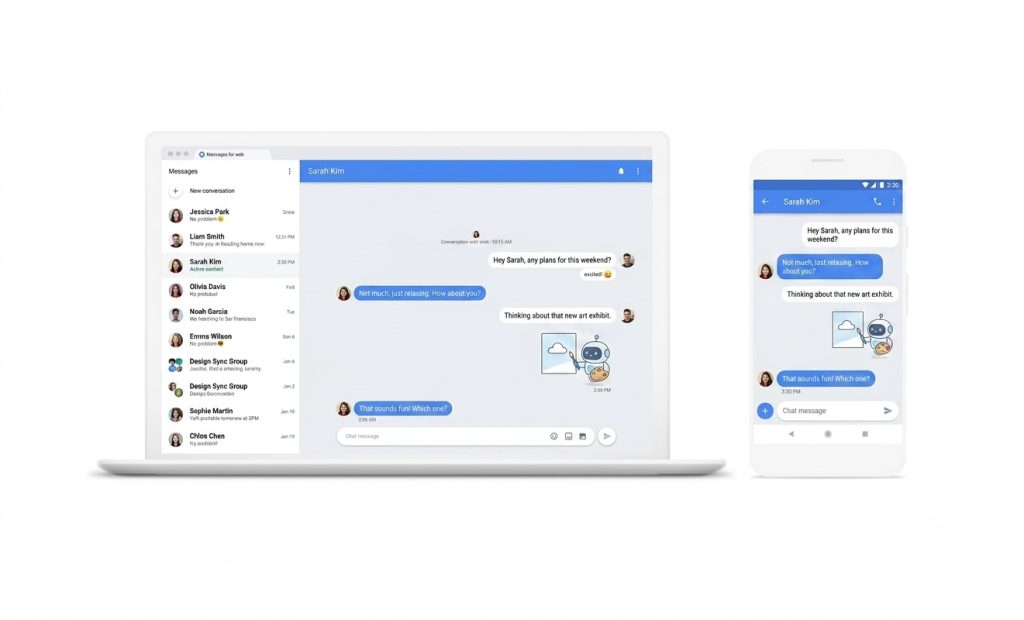
If the Android phone uses Google Messages, Google Messages for web can display its conversations in a supported desktop browser. This is designed for accessing your own paired phone—not for secretly reading an unrelated device.
- On the Android phone, open Google Messages.
- Tap the account menu or profile picture and select Device pairing.
- If prompted, choose the Google Account you want to use.
- On the computer, open Google Messages for web and sign in with the same Google Account.
- Match the emoji shown on the phone and computer to complete pairing.
Google also retains QR pairing as an alternative in some regions and app versions. If necessary, choose Switch to QR pairing from the Device pairing screen and scan the code shown on the computer.
Shared computer warning: Do not leave Messages for web paired on a public or shared computer. Unpair it when you finish so another user cannot open your conversations.
Google explains that Messages for web shows what is available in the Google Messages mobile app and sends messages through the paired phone. Review the official Google Messages for web instructions if the pairing screen looks different.
How to Restore Backed-Up Android Text Messages
Android backups can include SMS and MMS messages, as well as RCS messages when Google Messages is used. Restoration usually happens while setting up a replacement phone or after resetting a device, rather than through a separate online archive where you can browse each message.
- On the original phone, open the device’s Google backup settings and confirm that backup is enabled.
- Allow the backup to complete before resetting or replacing the phone.
- During setup of the restored or replacement Android phone, sign in with the same Google Account.
- Choose the available backup and select the data you want to restore.
- Open the messaging app after setup and allow time for conversations to reappear.
What restores depends on the phone model, Android version, backup age and app. Google also warns that a backup from a newer Android version may not restore completely to a phone running an older version. See Google’s current guide to backing up and restoring Android data.
Can You View Text Messages From Another Phone?
Yes, in certain authorized situations—but the method depends on whose messages they are and how the devices are connected.
| Situation | Appropriate method | What it does |
|---|---|---|
| Your iPhone messages on your Mac or iPad | Messages in iCloud and Text Message Forwarding | Syncs eligible conversations across your Apple devices |
| Your Android messages on a computer | Google Messages for web | Pairs the browser with your Google Messages app |
| Future incoming messages sent elsewhere | AutoForward Text | Routes new messages to another destination; it may not show old history |
| A child’s managed phone | Parental monitoring with authorization | Provides supported activity through a parent dashboard |
What If You Want New Text Messages Forwarded Automatically?
Viewing message history and forwarding new messages are different tasks. The methods above help you open conversations that already exist on your phone or synced devices. If you need future incoming SMS routed automatically to another destination, AutoForward Text is designed for that separate use case.
- Forward new incoming SMS to an email address, another phone number or supported business destination.
- Use filters so that only messages from selected senders or containing chosen keywords are forwarded.
- Access forwarded messages without repeatedly checking the original phone.
- Remember that forwarding starts after setup; it does not import old conversations that were already stored on the phone.
This is useful for your own secondary phone, travel SIM, work line or an authorized business device. For full setup methods and platform limitations, read our guide to automatically forwarding text messages.
How Parents Can View a Child’s Sent and Received Messages With Family Orbit
The native methods above are intended for accessing messages on your own phone or synced account. Parents who need ongoing visibility into a child’s managed device may require a dedicated parental-monitoring service.
Family Orbit’s SMS tracker is designed to let parents review supported message activity through a secure online dashboard. Depending on the device platform, permissions and available data, the dashboard can show sent and received messages, timestamps and contact information. Setup differs between Android and iPhone, so review the current compatibility and configuration requirements before subscribing.
How the Family Orbit setup works
- Create a Family Orbit parent account.
- Choose the correct setup method for the child’s iPhone or Android device.
- Complete the required permissions, account connection, or device configuration.
- Open the Family Orbit dashboard to review supported message activity and other parental-safety information.
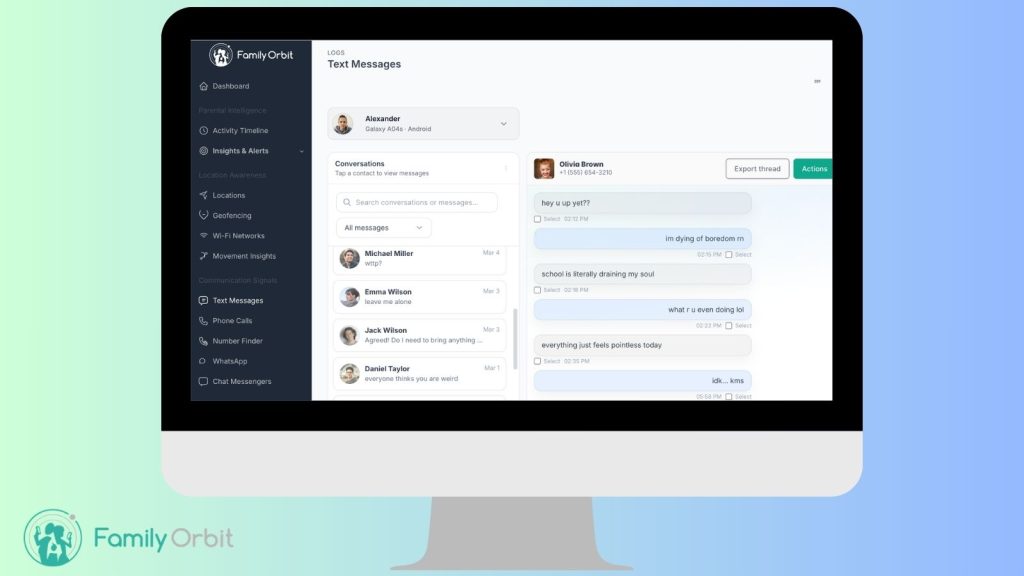
Be transparent: Family Orbit should be used only on a child’s device that the parent or guardian is legally authorized to manage. Device capabilities vary, and no monitoring tool can retrieve data that the operating system, account or backup does not make available.
Need parental visibility, not just access to your own messages?
Review sent and received message activity from a secure dashboard on a child’s managed device.
See Family Orbit SMS MonitoringHow to Tell Whether a Message Was Sent, Delivered or Read
The status information available depends on the messaging technology and the recipient’s settings.
- iMessage: may show Delivered or Read beneath the latest outgoing message. Read appears only when the recipient has read receipts enabled for that conversation.
- RCS: may show sent, delivered, and read indicators when both users, devices, carriers, and messaging settings support them.
- SMS: usually confirms that the phone attempted to send the message, but it does not normally provide a reliable read receipt. Some carriers and Android apps offer delivery reports.
- MMS: status indicators vary by carrier, device, and messaging app.
A missing Read label does not prove that the recipient ignored the message. Read receipts may be disabled, the message may have fallen back to SMS, or the recipient may be offline.
Why Are Some Sent or Received Messages Missing?
Before assuming that a conversation has been permanently deleted, check the following:
- The conversation was archived.
- The sender was filtered as unknown or spam.
- The phone switched between Google Messages, Samsung Messages or another default SMS app.
- Messages were set to delete automatically after a certain period.
- Messages in iCloud or Android backup had not finished syncing or restoring.
- The conversation used a different phone number, email address, SIM or Apple Account.
- The device had insufficient storage or a messaging-app database problem.
- A parent dashboard had not synced recently or lacked the required permissions.
Restart the phone, confirm that it has internet access, update the messaging app, check account settings and avoid clearing app data until you know whether the messages are backed up.
Privacy, Consent and Responsible Message Access
Text messages can contain private conversations, passwords, medical information and financial codes. Access only messages that belong to you or that you are legally authorized to manage.
- Use device syncing only with accounts and devices you control.
- Do not leave a web messaging session active on a shared computer.
- Protect Apple, Google, and parental-dashboard accounts with strong passwords and multi-factor authentication.
- Discuss monitoring expectations with a child in an age-appropriate way.
- Do not use parental tools to access another adult’s private communications without clear authorization.
- Review applicable privacy and monitoring laws in your location. This article is general information, not legal advice.
Frequently Asked Questions
How can I see all text messages sent and received?
Open the phone’s Messages app and select each conversation. Sent and received messages appear together in the thread. Use search, Archived, Unknown Senders and Spam & blocked to find conversations missing from the main list.
Where are sent text messages stored?
They are normally stored inside each conversation in the messaging app, not in a separate Sent folder. Cloud syncing or device backups may also keep copies, depending on your settings.
Can I view text messages online?
Android users with Google Messages can pair their phone with Google Messages for web. Apple messages are generally viewed through the Messages app on Apple devices using the same Apple Account rather than through an iCloud.com message inbox.
Can I view Android text messages on a computer?
Yes. If the phone uses Google Messages, pair it with Google Messages for web using the same Google Account or the available QR pairing option.
Can I see iPhone messages through iCloud?
Messages in iCloud keeps conversations updated across supported Apple devices signed in to the same Apple Account. It does not create a general browser inbox on iCloud.com.
How do I find an old text message?
Search the messaging app using the contact name, phone number or a keyword from the conversation. Also check archived, filtered, spam and recently deleted areas.
Can I recover deleted text messages?
On iPhone, check Recently Deleted; supported versions can generally recover messages deleted within 30 to 40 days. On Android, restoration may be possible from a Google or manufacturer backup, usually during device setup.
Can someone see my messages from another phone?
Messages may be visible on another device if it is signed in to your Apple or Google account, paired with your messaging app, or connected to an authorized monitoring service. Review connected devices, change compromised passwords and unpair sessions you do not recognize.
Can a mobile account owner read the contents of text messages?
Carrier account pages commonly show usage details such as dates, times and phone numbers rather than the full message body. Availability and retention vary by carrier and jurisdiction, so contact the carrier for its current policy.
How can parents view a child’s text messages legally?
Use a parental-control service only on a child’s device that you are authorized to manage, follow the service’s setup requirements and applicable laws, and use transparent, age-appropriate family rules.
Why can’t I see whether an SMS was read?
Traditional SMS normally does not provide read receipts. Read indicators are more commonly available with iMessage or RCS when both sides support them and the recipient has the relevant setting enabled.
Conclusion
To view text messages sent and received on your own phone, start with the built-in Messages app and its search, archive, spam and recovery tools. Use Messages in iCloud for your Apple devices or Google Messages for web when you need access from a computer. Backups can help restore messages after a device change, but they are not always browsable online.
For parents who need ongoing visibility into a child’s managed phone, a dedicated service such as Family Orbit can provide supported message activity in an online dashboard. Use it transparently, confirm platform compatibility and follow the privacy rules that apply where you live.
Update history
- July 2026: Rewritten as a cross-platform how-to guide; added iPhone, Android, Google Messages for web, message recovery, troubleshooting and consent guidance; removed outdated product comparisons and unrelated phone-number tracking claims; added a focused AutoForward Text section for forwarding future incoming messages.
- March 2024: Previous article update.
- Monitor Calls & Text Messages
- View Photos and Videos
- Location Tracking & Geofence
- Monitor WhatsApp & Kik
- Detect & Alert for Inappropriate Activities
- Monitor Websites Visited
- Compatible with Android and iOS



![5 Best Reverse Phone Lookup Apps for Android Users [Identify Unknown Numbers]](https://www.familyorbit.com/blog/wp-content/uploads/2023/04/reverse-phone-lookup-apps-android-300x180.jpg)
![5 Ways to Track Your Kid’s Android Phone from Your iPhone: [Cross-Platform Tracking]](https://www.familyorbit.com/blog/wp-content/uploads/2023/04/how-to-track-an-android-phone-from-iphone-300x180.jpg)