
Received a call or text from an unknown number? A reverse phone lookup can help you check available information such as the country, carrier, line type, caller identity signals, or spam reports before you decide whether to call back.
No lookup service can reveal a person’s live GPS location from a phone number alone. But if your goal is to identify who may be behind a number, there are several practical ways to investigate it safely and responsibly.
Check a Phone Number
Start with Family Orbit’s phone number tools before using a third-party directory.
Check a Phone Number WhatsApp Number Lookup
Phone-number lookup can help identify available number information. It does not provide live GPS tracking.
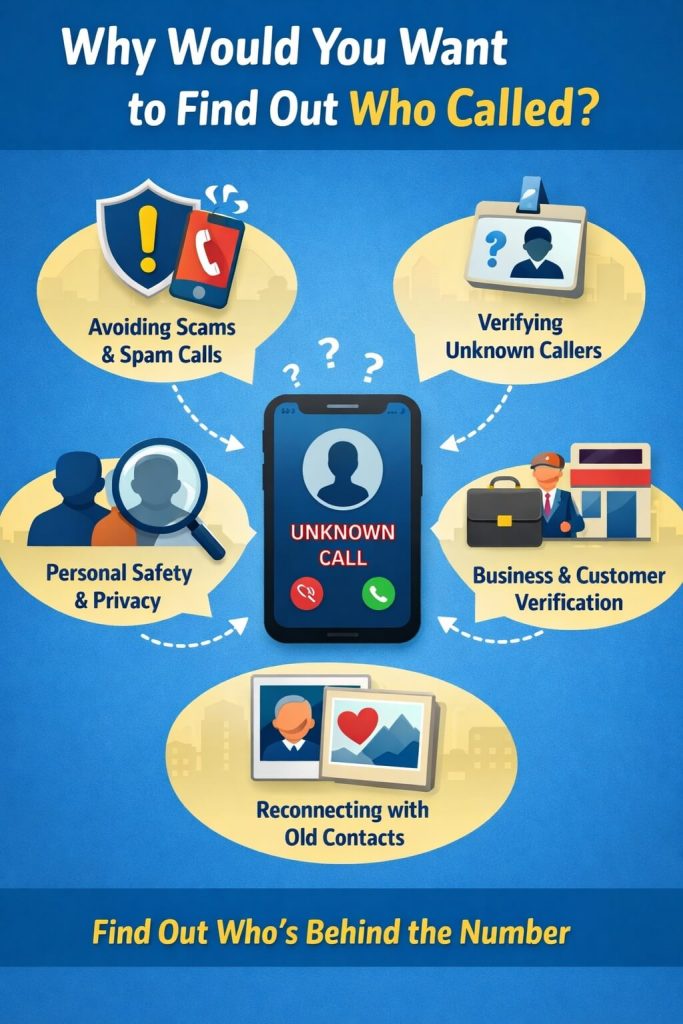
Why Would You Want to Find Out Who Called?
Have you ever received a missed call from a number you don’t recognize? Most of us have — and it often sparks the same question: “Should I call back, block it, or investigate?” Understanding the reasons behind this instinct is essential, especially in a time when scam calls and digital privacy threats are more prevalent than ever.
Here are the most common and legitimate reasons why someone would want to identify the owner of a phone number:
1. Avoiding Scams and Spam Calls
Robocalls, phishing scams, and caller ID spoofing are more sophisticated and frequent than ever. Some fraudsters pose as banks, delivery services, or even government agencies (like the IRS or Social Security Administration) to extract personal information or money.
By identifying the caller beforehand, you can avoid falling for fraudulent schemes — especially those that create urgency (“your account is compromised” or “you missed jury duty”).
💡 Fact: The FCC reports that U.S. consumers receive billions of scam calls annually, costing millions in losses.
2. Verifying Unknown or Unfamiliar Callers
Maybe you’re waiting for a callback from a job interview, a contractor, or a customer support line — and a number pops up with no name attached. Instead of blindly returning the call, checking who owns the number can prevent miscommunication or unnecessary delays.
3. Personal Safety and Privacy
If you’ve been receiving repeated calls or messages from an unknown number — especially late at night or without voicemail — it could be a safety concern. Reverse lookup tools can help you:
- Rule out harassment
- Identify prank or stalker-type behavior
- Decide whether to report the number to the authorities or your phone carrier
4. Reconnecting with Old Contacts
Sometimes a call from an unknown number isn’t spam — it’s someone from your past trying to reach out (e.g., an old friend, distant relative, or former coworker). Instead of ignoring it or assuming it’s spam, checking the number first gives you the chance to reconnect intentionally.
5. Business and Customer Verification
For small business owners, freelancers, or anyone working in client services, it’s common to receive calls from unknown numbers. Using a reverse lookup helps you:
- Verify if the call is from a legitimate lead or customer
- Prioritize callbacks based on known business contacts
- Reduce missed opportunities while still screening potential spam
In short, identifying who’s behind a phone number isn’t just about curiosity — it’s about protecting your time, money, and peace of mind.
Six Free Methods to Identify a Phone Number Owner
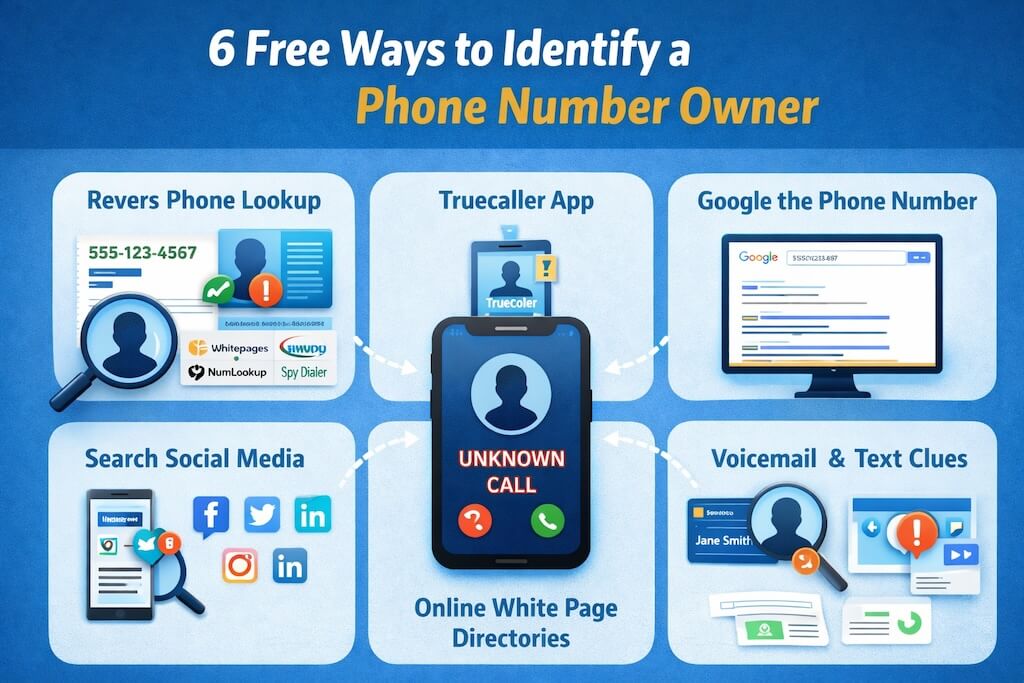
Not every solution requires a paid subscription or complicated process. In fact, many reliable tools and strategies are completely free and available to anyone with a smartphone or internet connection. Below are six proven and legally safe ways to find out who’s behind a phone number — without spending a dime.
2.1 Start With a Phone Number Lookup
Reverse phone lookup tools are one of the fastest ways to investigate an unfamiliar number. Depending on the service and the number, results may include country or region, carrier, line type, public directory information, caller-ID labels, or user-reported spam data.
Start with Family Orbit’s Number Tracker if you want to check available phone-number information without leaving the site. If the number contacted you through WhatsApp, the WhatsApp Number Lookup may also provide useful profile information where available.
Other Lookup Options
- Truecaller: useful for caller-ID labels and spam reports.
- Whitepages: useful for U.S. listed numbers and landlines.
- NumLookup: another web-based reverse lookup option.
🛑 Avoid tools that promise “live tracking” or GPS location from just a phone number. These are often misleading and may violate privacy laws.
2.2 Use the Truecaller App
Truecaller is a globally trusted caller ID and spam detection app with over 300 million users. It relies on a massive database of phone numbers submitted by users to identify unknown callers in real-time.
Why Use It:
- Instantly identifies callers, even if not in your contacts
- Flags known spam and fraud numbers
- Works globally (especially strong in India, U.S., and Europe)
🔐 Privacy Note: When you install the app, it may upload your contacts (with consent) to help build the database. Always review permissions carefully.
2.3 Google the Phone Number
It may sound basic, but Google is surprisingly effective for identifying a number. Businesses, freelancers, scammers, and even individuals often leave digital footprints — on directories, classifieds, forums, or social profiles.
How to search:
- Use quotation marks for exact match:
👉"123-456-7890" - Try variations (with or without area code formatting)
- Look for results in business listings, websites, or review sites
💡 If the number is tied to a scam or spam report, you’ll likely see forums like 800notes, WhoCallsMe, or ScamNumbers show up in results.
2.4 Search Social Media Platforms
Many people use their phone number to register accounts on platforms like Facebook, LinkedIn, or Instagram — and those numbers may be partially or fully searchable, depending on privacy settings.
How to try:
- Use Facebook’s search bar with the number
- If the number contacted you on WhatsApp, use the Family Orbit WhatsApp Number Lookup to check available profile information
- Use LinkedIn if you suspect the number is tied to a business or professional contact
🧠 Tip: WhatsApp profile information depends on the user’s privacy settings and what is publicly available. Treat a lookup result as a clue, not proof of identity.
2.5 Use Online White Page Directories
White page services are digital versions of phone books, mostly for U.S. landlines. These can show the owner’s name, city, and whether the number is still active.
Try:
📍 Note: These tools work best for landlines or listed numbers. Mobile numbers are less likely to show unless publicly registered.
2.6 Analyze Voicemail or SMS Clues
If the caller left a voicemail or text, read/listen carefully. Scammers tend to follow predictable patterns, such as:
- Urgent language (“Your account is compromised!”)
- Vague details or pressure to call back
- Generic greetings like “Dear Customer”
On the other hand, legitimate callers will typically include:
- Their full name and company name
- A callback number (often matching the one that called)
- Specific context or reason for the call
If you’re receiving suspicious texts, you might also want to find out who’s texting you from that number using similar methods.
🧠 If the message sounds suspicious, do not call back. Search the number or report it to your carrier or FTC.
Paid Phone Lookup Tools: When Free Results Are Not Enough
Free tools are often enough for basic caller identification, but paid people-search services may provide additional public-record information for some U.S. numbers. Results can still be incomplete or outdated, so treat them as leads rather than verified facts.
| Tool | Best For | Free? | Notes |
|---|---|---|---|
| Family Orbit Number Tracker | Basic phone-number intelligence | Limited / tool-based | Best first step for number-related information |
| Truecaller | Caller ID and spam labels | Yes / premium options | Useful for user-reported caller identity and spam signals |
| Spokeo | Public-record and people search | Paid | U.S.-focused; information may vary by number |
| Intelius | Deeper people-search reports | Paid | Review subscription terms before purchase |
For most unknown calls, start with a basic number lookup and spam check. Use a paid service only if you genuinely need deeper public-record information and understand the service’s terms and limitations.
🔐 Parent Concerned About Who Is Contacting a Child?
If you are a parent managing your child’s device, Family Orbit is designed for ongoing parental monitoring rather than one-off reverse phone lookups.
Family Orbit does not reveal the live GPS location of an unknown caller from their phone number. It is intended for authorized parental supervision of a device you manage.
Legal Considerations When Looking Up a Phone Number
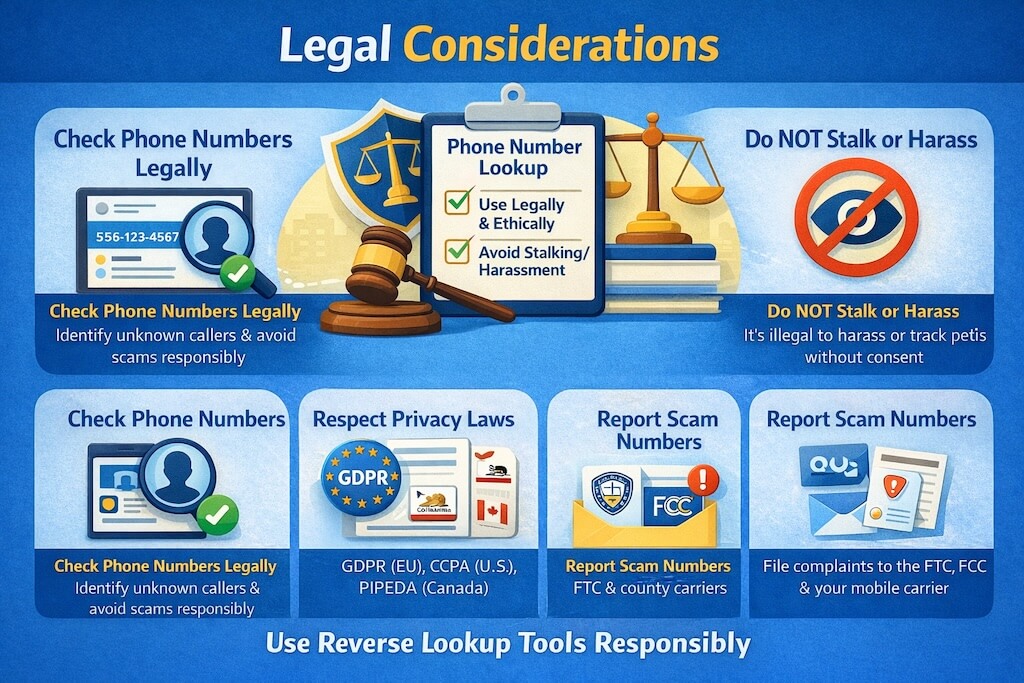
Before you run a phone number through a reverse lookup tool or background check service, it’s critical to understand what’s legal, what’s ethical, and what may cross the line. Even though many tools are publicly available, the way you use them matters — both legally and morally.
Here’s what you need to know to stay compliant and responsible when searching for phone number owners.
1. It’s Legal to Look Up a Phone Number for Personal Use
In many places, using publicly available or lawfully licensed phone-number information for personal purposes is generally permitted, but rules vary by jurisdiction and by how the information is used. Common personal uses include:
- Identify unknown callers
- Avoid spam or scam attempts
- Reconnect with someone you know
- Verify someone before calling or texting back
Using public records or licensed lookup tools for ordinary personal purposes is generally different from regulated background screening or unauthorized surveillance. Always follow local law and the service’s terms of use.
2. What You Cannot Do
You cannot legally track someone’s real-time location using just their phone number — unless they’ve shared it intentionally or you have legal access. (Here’s a breakdown of what’s possible and legal when trying to track an iPhone location by phone number.)
You cannot use reverse phone lookup tools for any of the following:
- Stalking or harassment
- Tracking someone’s real-time location
- Accessing private communications (texts, voicemails, GPS data)
- Making decisions related to employment, housing, credit, or insurance
→ This would violate the Fair Credit Reporting Act (FCRA)
If a site claims to offer “real-time GPS tracking by phone number,” treat that claim cautiously. A phone number alone does not provide live GPS access, and location tracking can be subject to consent, ownership, parental-authority, and local-law requirements.
3. Data Privacy and Consent Laws
Depending on where you live — or where the phone number is based — different laws may apply:
| Region | Key Law | What It Means |
|---|---|---|
| USA | CCPA (California), FCRA | Must disclose data use; limits on background checks |
| EU | GDPR | Requires explicit consent for most personal data processing |
| Canada | PIPEDA | Individuals must be informed how their data is used |
⚠️ If you’re using tools that collect or store personal data, make sure they’re GDPR and CCPA compliant, especially if you live in or serve users in those regions.
4. Read the Terms of Use
Most reputable reverse lookup tools (e.g., Spokeo, Intelius, Truecaller) include clear Terms of Service stating how you can legally use their data.
Before using any paid service, take a moment to check:
- Whether the service is FCRA-compliant (most are not)
- What they do with your searches or input data
- How they protect your information
If you suspect your own device is being tracked, here’s how to tell if someone is tracking your iPhone.
5. Report Suspicious or Abusive Numbers
If you’ve verified that a number is being used for fraud, scams, or harassment, take these next steps:
- 🔗 Report the number to the FTC (U.S.)
- 🔗 File a complaint with the FCC for robocalls or spoofing
- 🔗 Use Truecaller or Hiya to flag spam numbers in the community database
- 📞 Contact your mobile carrier for support and blocking options
🧠 Blocking a number on your phone may stop future calls or messages, but reporting it helps prevent others from becoming victims.
Summary: What’s Legal — and What’s Not
| Action | Legal? | Notes |
|---|---|---|
| Using reverse lookup for personal info | ✅ Yes | Must be for personal, ethical use |
| Searching social media for a number | ✅ Yes | Public data only |
| Using GPS tracking apps without consent | ❌ No | Illegal in most cases |
| Background checks for hiring or credit | ❌ No | Requires FCRA-compliant services |
| Reporting spam numbers to FTC/FCC | ✅ Yes | Encouraged and legal |
Conclusion: Start With the Number, Then Decide What to Do
If an unfamiliar number calls or texts you, start with the simplest checks: run a phone-number lookup, look for spam reports, search the number online, and review any voicemail or message context before you respond.
If the number contacted you through WhatsApp, use the WhatsApp Number Lookup. If you want basic number intelligence such as carrier, country, or line-type information, start with the Family Orbit Number Tracker.
Ready to Check the Number?
Frequently Asked Questions
❓ Can I trace a phone number for free?
Yes, you can trace a phone number for free using tools like NumLookup, Truecaller, Spy Dialer, or even a simple Google search. These services use publicly available data to show who a number might belong to. However, free results may be limited — especially for mobile numbers or unlisted lines. If you’re looking for more detailed information, such as address history or related people, you may need to use a paid lookup tool like Spokeo or Intelius. Always use these tools responsibly and for legal, ethical purposes.
❓ Is it legal to find out who called me?
Yes — it’s generally legal to look up a phone number to identify the caller, as long as you’re using public records or licensed tools and not violating privacy laws. What’s not legal: using any tool to track someone’s live location, spy on them, or gather information for decisions related to employment, housing, or credit (this would require FCRA-compliant tools). Always review the terms of use and privacy policies of any service you use.
❓ What’s the most accurate phone lookup tool?
The accuracy of a phone lookup tool depends on the region, phone type, and available public data. For general use:
- Truecaller is excellent for mobile numbers and global coverage.
- Whitepages is reliable for U.S. landlines and listed numbers.
- Spokeo and Instant Checkmate offer deeper insights if you need more than just a name.
No tool is 100% accurate — especially for new numbers, VOIP lines, or numbers that haven’t been used widely.
❓ Why do spam calls show up as “Unknown” or “Private Number”?
Scammers and robocallers often use caller ID spoofing to hide their real identity or make it look like they’re calling from a local number. This tactic makes it harder to block or trace them. Some mobile carriers and apps like Truecaller, Hiya, and Google Phone (Android) help detect and label these spoofed calls automatically. You can also block “Unknown Callers” directly in your phone settings, though this may filter out legitimate calls too.
❓ Can I find someone’s address from their phone number?
Only in limited cases. If the person’s phone number is listed publicly (like on a business website or in a white pages directory), you may see a city or general location. But for mobile numbers, unlisted lines, or people with strong privacy settings, it’s unlikely you’ll get an address without using a paid background check service. Even then, accuracy can vary, and you should never use this data to contact or approach someone without their consent.
❓ Can I find out who owns a phone number without paying?
Sometimes. Free lookup tools, caller-ID databases, search engines, public business listings, and spam-reporting services may identify a number or provide useful clues. Mobile and unlisted numbers are more difficult, and no free tool can guarantee an owner name for every number.
❓ Can I check whether a phone number is associated with WhatsApp?
You can use the Family Orbit WhatsApp Number Lookup to check available WhatsApp profile information for a number. What is visible depends on the account and its privacy settings.
- Monitor Calls & Text Messages
- View Photos and Videos
- Location Tracking & Geofence
- Monitor WhatsApp & Kik
- Detect & Alert for Inappropriate Activities
- Monitor Websites Visited
- Compatible with Android and iOS




![5 Best Reverse Phone Lookup Apps for Android Users [Identify Unknown Numbers]](https://www.familyorbit.com/blog/wp-content/uploads/2023/04/reverse-phone-lookup-apps-android-300x180.jpg)